
In industrial vacuum systems, Silicone diffusion pump oil plays a critical role in achieving and maintaining a deep vacuum. Yet, many industries overlook its importance — using low-grade or incompatible oil that compromises efficiency, increases maintenance costs, and shortens equipment lifespan.
At Hindustan Vacuum Chem Engineers (HVCE), we specialize in high-performance silicone diffusion pump oils designed to deliver consistent results in high-vacuum applications such as coating, metallurgy, and research laboratories.
Understanding Silicon Diffusion Pump Oil
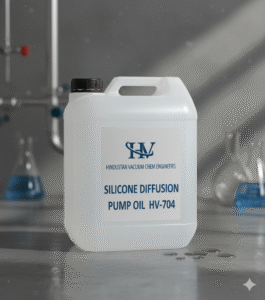
A diffusion pump works by heating the pump oil to generate a high-speed vapor jet that directs air molecules out of the vacuum chamber. The quality and type of oil used directly affect how efficiently this process occurs.
Silicone diffusion pump oils are specially formulated synthetic fluids designed to withstand high temperatures, resist oxidation, and provide stable vacuum levels. Compared to hydrocarbon oils, silicone-based oils maintain performance for much longer periods under extreme conditions.
Key Benefits of the Right Silicone Diffusion Pump Oil
Enhanced Vacuum Stability: Maintains uniform pressure and clean operations.
Energy Efficiency: Reduces the need for excessive heating cycles.
Longer Equipment Life: Minimizes wear on pumps and accessories.
Cleaner Coating Results: Essential for industries like thin-film deposition and semiconductor fabrication.
Why Silicone Diffusion Pump Oils Are Preferred
Silicone-based oils are engineered for thermal stability and chemical inertness. Unlike hydrocarbon oils, they do not easily oxidize or decompose at high operating temperatures. This results in:
Longer oil life and reduced maintenance frequency
Clean vacuum environments with minimal backstreaming
Improved reliability under high load and temperature conditions
Some popular types include Dow Corning DC-704, DC-705, and equivalent high-vacuum silicone oils.
The Connection Between Oil Quality and System Performance
Using a low-grade or incorrect oil can severely affect performance:
Reduced Pumping Speed: Poor vaporization characteristics slow down evacuation times.
Increased Contamination: Hydrocarbon oils can release impurities that compromise sensitive vacuum processes.
Frequent Maintenance: Low-quality oils degrade faster, leading to deposits and clogging.
In contrast, high-quality silicone diffusion pump oils provide consistent performance even in ultra-high-vacuum (UHV) conditions, often below 10⁻⁶ torr.
Choosing the Right Grade for Your Application
Not all silicone oils are the same. The selection depends on:
-
Ultimate vacuum level required (e.g., 10⁻⁵ vs. 10⁻⁸ torr)
-
Operating temperature range
-
Compatibility with materials in your system
-
Cost and replacement intervals
For example:
-
DC-704 suits standard high-vacuum systems.
-
DC-705 performs better in ultra-high-vacuum and high-temperature applications.
Maintenance and Best Practices
Even with the best oil, proper maintenance is vital:
Regularly monitor oil color and viscosity.
Avoid contaminants entering the pump.
Replace oil periodically as per manufacturer recommendations.
Use proper cold traps or baffles to prevent backstreaming.
Conclusion
Choosing the right silicone diffusion pump oil is more than just a maintenance decision — it’s a strategic move to improve vacuum performance, extend system life, and ensure reliable results. Investing in high-quality silicone oils ensures your vacuum system operates at peak efficiency, maintaining the precision your processes demand.