

High Vacuum Silicone Grease performs exceptionally well across a remarkable temperature range, from cryogenic depths to over 200∘C. When working with vacuum systems, selecting the right grease isn’t just a minor detail—it’s absolutely critical for system performance and longevity.
We’ve found that silicone-based formulations, particularly those with polydimethylsiloxane (PDMS) liquid combined with fillers like PTFE or zinc oxide, offer superior protection for vacuum applications. If you’re searching for the best high vacuum grease in India or anywhere else, understanding the properties that matter most is essential. Specifically, vacuum silicone grease uses extend beyond basic lubrication—these specialized compounds exhibit very low outgassing and resist migration within vacuum systems, making them ideal for high and ultra-high vacuum applications. Additionally, they maintain consistent sealing properties from below −40∘C to over 200∘C, ensuring reliability in extreme conditions.
In this comprehensive guide, we’ll walk you through everything you need to know about selecting the perfect high vacuum silicone grease for your specific requirements
Understanding High Vacuum Silicone Grease
High vacuum silicone grease consists primarily of polydimethylsiloxane (PDMS) liquid combined with fillers such as PTFE or zinc oxide. This specialized formula creates a stiff, non-melting lubricating material that maintains its consistency across temperatures from −40∘C to 204∘C.
The physical appearance is distinctive—translucent white with a thick, stiff texture. Most formulations have an NLGI Grade of 3-4, giving them excellent staying power even in challenging conditions. Furthermore, high vacuum silicone grease exhibits remarkably low volatility, with evaporation rates typically between 0.5–1% at 200∘C.
Due to its unique chemical structure, this specialized grease offers exceptional resistance to water, chemicals, mineral oils, vegetable oils, and most common gasses. In fact, it remains insoluble in water, methanol, ethanol, acetone, glycol, and glycerine.
Product Spotlight: High-Performance Silicone-Based Grease
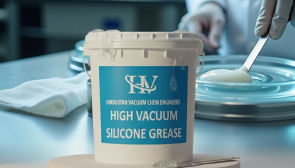
For highly demanding applications, specialized formulations offer enhanced performance. The High Vacuum Silicone Grease from Hindustan Vacuum Chem Engineers, for example, is a high-quality, silicon-based compound fortified with polyalkyl Siloxane and other chemical additives.
This product is engineered to be:
A chemical-resistant stopcock grease compound.
A lubricant for synthetic rubber O-rings, seals, and gaskets.
An excellent mould release agent for polymers like epoxy and polyurethane.
A water-repellent airtight sealant for air control valves and pneumatic systems.
A dielectric sealant for electrical systems.
It is highly inert and boasts a wide operating range of −30∘C to 300∘C, making it suitable for applications requiring extreme heat stability. It also offers broad material compatibility, working well with engineering plastics based on Styrene (ABS, HIPS), Nylons, and Polyesters.
What sets high vacuum grease apart is its performance in vacuum systems. It maintains stability in pressures up to 10−6 mbar or even 10−9 Torr without significant outgassing that would contaminate sensitive equipment.
Nevertheless, there’s one characteristic worth noting—silicone grease has a tendency to “creep” or spread beyond its application area. This can be advantageous for coverage but requires careful management in certain applications to prevent unwanted contamination of surfaces.
Types of High Vacuum Grease and Their Applications
The vacuum industry relies on several distinct types of high vacuum grease, each engineered for specific operational needs.
Silicone-Based Vacuum Grease dominates the market with its versatility and robust performance. These formulations excel in thermal stability from cryogenic temperatures to over 200∘C while offering exceptional resistance to chemicals, water, and oxidation. Their non-conductive properties provide additional protection for electrical components, making them ideal for general-purpose vacuum sealing and high-temperature applications.
Hydrocarbon-Based Vacuum Grease serves as a cost-effective alternative for less demanding environments. These petroleum-derived products create excellent seals, especially for ground glass joints and O-rings. Moreover, they’re easier to clean using common solvents like hexane or acetone, which simplifies maintenance.
PFPE-Based Vacuum Grease represents the premium tier with outstanding chemical inertness.
How to Choose the Right Grease for Your System
Selecting the ideal vacuum grease requires careful analysis of your specific operational requirements. According to industry experts, five critical factors should guide your decision-making process:
1. Vacuum Level Required : For systems demanding ultra-high vacuum (above 10−8 Torr), silicone-based grease generally outperforms hydrocarbon alternatives.
2. Temperature Range : Consider both extremes of your operational temperatures. High vacuum silicone grease maintains consistency across −40∘C to 204∘C (or up to 300∘C for specialized products), preventing melting, thermal degradation, cracking, or crazing.
3. Material Compatibility : Silicone greases offer excellent compatibility with most metals and elastomers without damaging O-rings or seals. However, always verify compatibility with technical datasheets, particularly for specialized plastics.
4. Chemical Exposure : Assess resistance needs based on application environment. Quality silicone greases resist water, most chemicals, vegetable oils, and mineral oils. For highly corrosive environments, PFPE-based options may be preferable.
5. Application-Specific Requirements : Consider whether you need food/pharmaceutical grade certification or specialized properties like preventing fogging of delicate lenses.
Prior to final selection, evaluate maintenance factors as well. Silicone greases typically require less frequent reapplication, whereas hydrocarbon options might offer easier cleaning with common solvents.
For systems operating at extreme temperatures or in chemically aggressive settings, ENQUIRY NOW about specialized formulations designed for your unique conditions.
Conclusion
Selecting the right high vacuum silicone grease ultimately determines the efficiency and longevity of your vacuum system. Throughout this guide, we’ve explored how these specialized formulations offer exceptional temperature stability from cryogenic levels to beyond 200∘C while maintaining remarkably low outgassing properties. PDMS-based greases certainly stand out for their chemical resistance and stability under extreme vacuum conditions.
Remember that vacuum level requirements should guide your selection first and foremost. Ultra-high vacuum applications demand silicone-based options, while less stringent systems might benefit from hydrocarbon alternatives. Additionally, temperature range plays a crucial role—the right grease must withstand both your system’s coldest and hottest operating points without degrading.
We believe that understanding these key factors empowers you to make informed decisions about which vacuum grease best suits your specific needs. The difference between optimal performance and system failure often comes down to this seemingly small detail. Therefore, taking time to evaluate your specific requirements against the properties of available greases will yield significant returns in system reliability and performance longevity. Your vacuum system deserves nothing less than the perfect match for its unique operating conditions.