
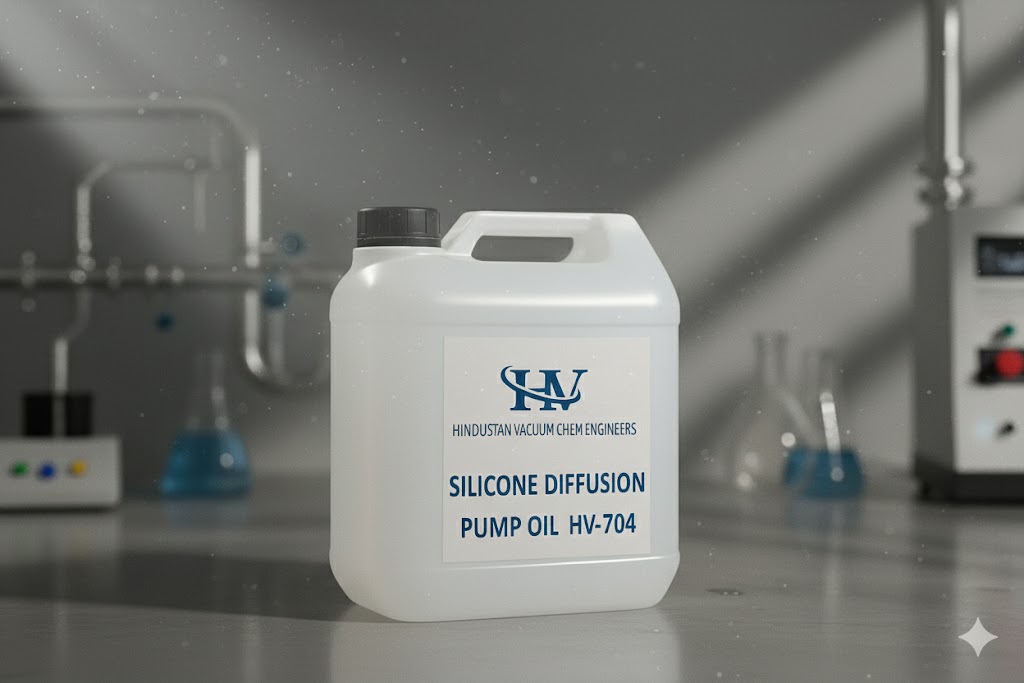
In the rapidly evolving world of vacuum technology, the importance of using the right silicone diffusion pump oil cannot be overstated. As industries such as semiconductor manufacturing, thin-film coating, and space research advance in 2025, the performance and longevity of vacuum systems depend heavily on the type and quality of the oil used. At Hindustan Vacuum Chem Engineers, we understand that even the smallest decision in oil selection can have a massive impact on productivity, energy efficiency, and equipment durability.
Below, we share five expert tips to help you choose the most efficient and high-performing silicone diffusion pump oil for your vacuum system this year.
Match the Oil Grade with Your Desired Vacuum Range
The first and most critical step is to select the oil that meets your system’s vacuum pressure requirements. Not all diffusion pump oils perform equally at different vacuum levels.
For ultra-high vacuum applications (10⁻⁸ Torr and below), use high-purity silicone oils like Dow Corning DC-705 or equivalents. These oils have extremely low vapor pressures, reducing the risk of backstreaming and contamination.
For medium to high vacuum systems (10⁻⁶ to 10⁻⁷ Torr), DC-704 or Santovac 5 are highly reliable, providing excellent stability and cost-efficiency.
Pro Insight: Always check the manufacturer’s specifications to ensure the oil’s vapor pressure aligns perfectly with your system’s performance goals. Using an oil beyond its recommended pressure range can lead to contamination and operational inefficiencies.
Prioritize Thermal and Oxidation Stability
Diffusion pumps operate under intense heat, often reaching temperatures above 200°C. Choosing a thermally stable silicone oil ensures consistent performance and protects against degradation.
High-quality oils maintain chemical stability even when exposed to repeated heating and cooling cycles. They resist oxidation and carbon formation, which are the primary causes of oil breakdown.
Key features of thermally stable silicone oils include:
High flash and fire points
Minimal viscosity change with temperature fluctuations
Resistance to cracking and polymerization
When the oil remains stable under stress, you reduce downtime, extend the pump’s lifespan, and save on maintenance costs.
Assess Chemical Compatibility with Your System
Every vacuum system operates under different environmental and chemical conditions. The oil you select should be chemically inert and compatible with your pump materials and process gases.
If your process involves reactive gases, corrosive vapors, or aggressive chemicals, silicone-based oils are ideal because of their non-reactive molecular structure. This minimizes the formation of unwanted by-products and ensures your system remains clean.
Pro Tip: Never mix different grades or brands of diffusion pump oil. Doing so can cause molecular instability, separation, or gumming, leading to severe system damage. Always drain and clean your system completely before switching to a new oil type.
Opt for Oils with Low Backstreaming and Vapor Pressure
Backstreaming occurs when oil vapor migrates into the vacuum chamber, contaminating substrates and reducing product quality. In precision industries like optical coating or semiconductor production, even trace contamination can cause expensive product rejection.
To minimize backstreaming:
Select oils with extremely low vapor pressure and narrow molecular weight distribution.
Use cold traps or baffles to capture any escaping vapors.
Maintain correct operating temperature—neither too low (causing poor pumping speed) nor too high (causing vaporization).
Premium silicone oils like Dow Corning 705 are engineered to resist backstreaming, ensuring superior vacuum integrity and clean operation even after extended use.
Buy Only from Reliable and Certified Suppliers
With the rise of counterfeit and low-grade industrial oils, supplier credibility has become a crucial factor in 2025. Authentic silicone diffusion pump oil from trusted sources ensures you receive consistent quality, proper packaging, and genuine batch certifications.
When sourcing oil:
Verify the batch number, manufacture date, and purity certificate.
Choose brands with a proven track record such as Dow, Santovac, or Hindustan Vacuum Chem Engineers.
Avoid unverified online listings offering “discounted” versions of branded oils—they often contain impurities or diluted formulations.
Expert Recommendation: Partner with suppliers who not only sell but also provide technical support, ensuring you get the right oil for your specific vacuum setup.
Understanding the Importance of Silicone Diffusion Pump Oil
Silicone diffusion pump oils serve as the lifeblood of high-vacuum systems. They are responsible for transferring heat, creating vapor jets, and maintaining system cleanliness. A poor-quality oil can lead to:
Increased contamination and reduced product yield
Pump corrosion or clogging
Frequent maintenance shutdowns
Energy inefficiency due to poor thermal performance
In contrast, a high-grade silicone oil enhances:
Pump efficiency and throughput
System cleanliness and durability
Overall operational cost-effectiveness
When chosen wisely, your diffusion pump oil can drastically improve system uptime and long-term return on investment.
Best Practices for Maintaining Silicone Diffusion Pump Oil
Even the best oil requires proper handling and maintenance to perform optimally. Follow these practices to maximize oil life:
Monitor oil color and viscosity regularly; dark or cloudy oil indicates contamination.
Replace oil every 6–12 months, depending on usage and process conditions.
Avoid overfilling the pump, as excess oil can cause splattering or inefficient vapor flow.
Use clean and dry glassware when refilling or sampling to prevent moisture ingress.
Store oil in sealed containers, away from sunlight and temperature extremes.
Implementing these habits ensures your vacuum system remains reliable, efficient, and contamination-free throughout its operational lifespan.
The Future of Diffusion Pump Oils in 2025
As technology continues to advance, silicone diffusion pump oils are being formulated with enhanced molecular uniformity, longer thermal endurance, and eco-friendly additives. The next generation of oils focuses on reducing energy consumption while maintaining ultra-high vacuum capabilities.
Manufacturers like Hindustan Vacuum Chem Engineers are driving innovation with customized formulations designed for diverse industrial applications, from thin-film deposition to space simulation chambers.
By staying updated with the latest oil formulations and adhering to these expert selection tips, you ensure your vacuum system remains future-ready and consistently efficient.
Conclusion
Choosing the right silicone diffusion pump oil in 2025 is more than a maintenance decision—it’s a strategic investment in your system’s performance, reliability, and cost-efficiency. By focusing on vacuum range compatibility, thermal stability, chemical resistance, backstreaming control, and authentic sourcing, you safeguard your operations against unnecessary downtime and performance loss.
Whether you are running a research laboratory, coating unit, or industrial vacuum line, making the right oil choice today ensures smoother, cleaner, and more productive operations tomorrow.